
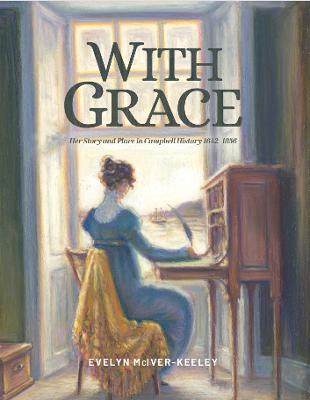
For several centuries the Campbells were known for their strong-minded independent women who often stepped in to save their families and to protect their livelihood. They were the unsung heroines, whose stories came to life through careful research.
The central character in this story is Grace Buchanan Campbell who was born in Glasgow in 1784. A published author during the first quarter of the nineteenth century. Grace moved in the literary circle of Edinburgh’s Blackwood group. This was a time when it was considered inappropriate for women to become published poets or authors. Women authors faced additional difficulties, in a world where their place was defined by men.
Her story is one of loss, fortitude and kinship. Grace’s early life was overshadowed by revolution and war. Her parents divorced and her mother died when she was aged ten. Grace then went to live with her grandmother in Edinburgh.
Clan clashes, religious struggles and patronage set the scene in Argyll during the mid 17th century during the turbulent times when many men and women suffered for their religious and political beliefs. This was followed by the Darien disaster, resulting in hardship for many Scottish families. During the early-eighteenth century, the family, in an effort to survive financially, became plantation owners in Jamaica. Over several generations, family members worked the plantations with their slaves, as was common at the time.
Graces grandfather Duncan has an influential role in the story, a weathy merchant and ship owner in London, he grew up in the enlightened world of Glasgow University where his father was the principal. He was cultured, generous to his family and closely associated with penal reform in Britain. He was mentor to William Bligh, the husband of his niece, who is remembered for the ill-fated mutiny on the Bounty.
It is a story with many characters: ministers, merchants, lairds, explorers, brewers, solicitors, surgeons, naval men, authors and an architect. Robert Burns and Robert Louis Stevenson make brief appearances.
Grace inherited the strengths of her forebears. They reveal spirited and resourceful Scottish women, staunch Presbyterianism and a strong sense of family. Her novels are true to the romantic genre and portray her spiritual and moral beliefs amid echoes of her family history.
These were families whose lives were intertwined with the politics of significant periods of history.The pioneering spirit of Grace’s family led to settlement in Canada where one of her sons became an eminent jurist. Another son was appointed to the position of minister of the Free Church of Scotland in New Zealand. Their stories are included in this narrative.
Format: Paperback
Pages: 290
Imprint: Small New Zealand Publisher
Publication date: 26/04/2023