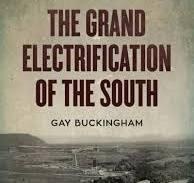

Grand Electrification of the South
By Gay Buckingham
Review by Harry
The production and distribution of electricity might seem like an academic and remote topic, but contained in this story are themes universal and important to the history and progression of New Zealand society—democracy, the public good, corporate power, social power, and the vision to take a leap into the unknown in the pursuit of social progress. Comprising over 100 historic photographs, a substantial index, and a forensic approach to understanding the particular factors of Southland history and its people that lead to this world-leading industrialisation, any follower of New Zealand history or political economy will find this text satisfyingly comprehensive.
Indeed, it has been stated that us New Zealanders live in a perpetual ‘amnesia,’ with every generation starting anew – absent the lessons of the past and the knowledge base of prior generations. Thankfully, we have authors like Gay Buckingham to help counter this self-blindness. Considering that power is once again a politicised issue, from privatization to the mounting cost of keeping the lights on, The Grand Electrification of the South tells the social history of what we can do when economic production represents the priorities of the public, not shareholders. During the interwar years, New Zealand had the greatest number of rural people with access to electric power in the whole of the developed world. ‘It gives us a chance to contemplate and recognise pioneers who worked for the common good, who were optimistic about the future,’ the author says.